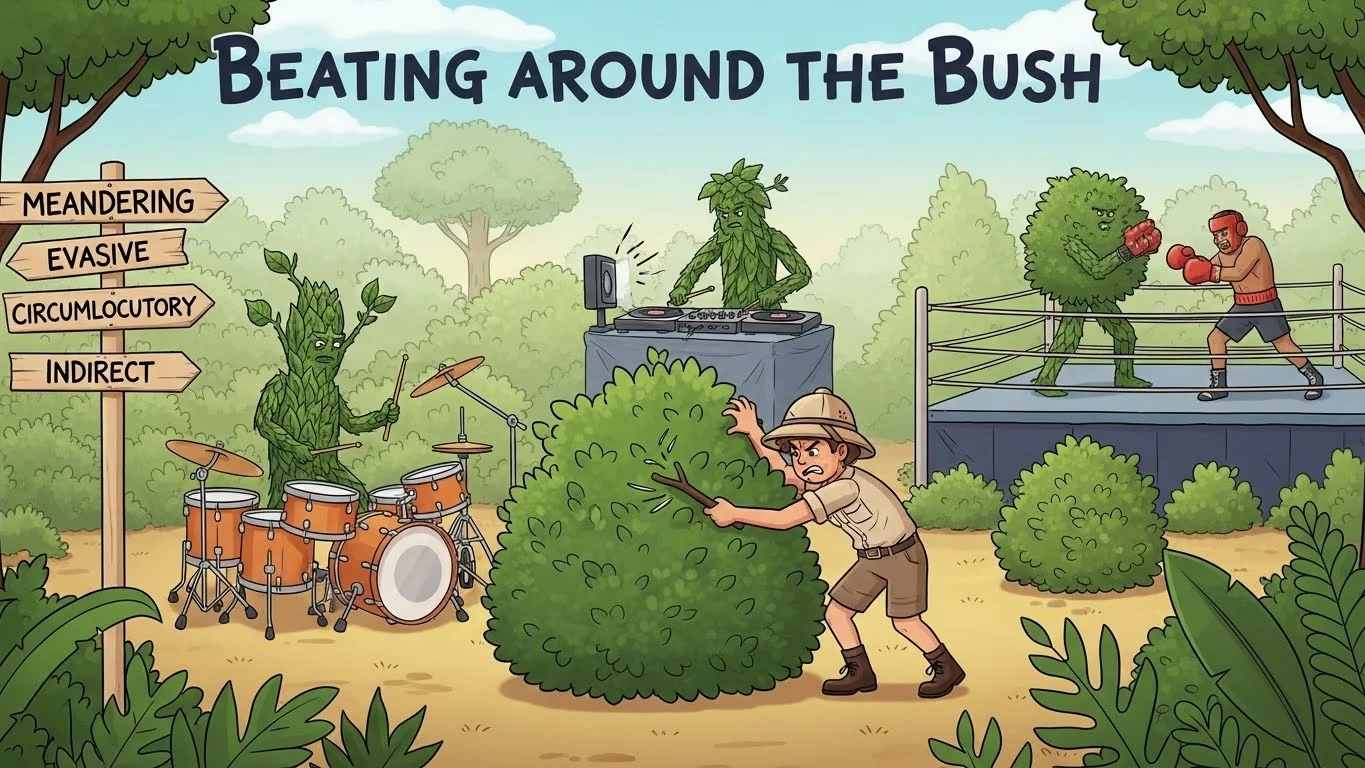
Clear and direct communication is essential in professional writing, academic essays, and everyday conversations. The phrase “beating around the bush” is commonly used to describe someone who avoids the main point or speaks indirectly. While it is effective, using the same expression repeatedly can weaken your writing and limit your vocabulary range. That’s why learning alternative ways to say “beating around the bush” can significantly improve clarity, tone, and professionalism. Whether you’re writing an essay, drafting a business email, or analyzing communication styles, these alternatives help you express the idea more precisely. In this article, you’ll explore 25 other ways to say “beating around the bush”, along with detailed explanations and examples to help you use them naturally and confidently in both formal and informal contexts.
- 25 Other Ways To Say “Beating Around the Bush”
- Avoiding the Point
- Speaking Indirectly
- Not Getting to the Point
- Talking in Circles
- Being Vague
- Dodging the Issue
- Skirting the Issue
- Sugarcoating the Message
- Using Evasive Language
- Prolonging the Discussion
- Hesitating to Be Direct
- Rambling Unnecessarily
- Circumventing the Topic
- Being Ambiguous
- Deflecting the Question
- Frequently Asked Questions

25 Other Ways To Say “Beating Around the Bush”
👉 Avoiding the point
👉 Speaking indirectly
👉 Not getting to the point
👉 Talking in circles
👉 Being vague
👉 Dodging the issue
👉 Skirting the issue
👉 Sugarcoating the message
👉 Using evasive language
👉 Prolonging the discussion
👉 Hesitating to be direct
👉 Rambling unnecessarily
👉 Withholding the main point
👉 Circumventing the topic
👉 Being unclear intentionally
👉 Talking without substance
👉 Delaying the truth
👉 Using roundabout language
👉 Avoiding direct answers
👉 Lack of straightforwardness
👉 Being ambiguous
👉 Mincing words
👉 Softening the message
👉 Deflecting the question
👉 Speaking cautiously
Avoiding the Point
Definition: Deliberately not addressing the main issue.
Description: Often used when someone chooses not to confront a topic directly.
Usage Examples:
-
He kept avoiding the point instead of answering clearly.
-
Avoiding the point can confuse readers.
Speaking Indirectly
Definition: Communicating in a non-straightforward manner.
Description: Common in polite or sensitive discussions.
Usage Examples:
-
She was speaking indirectly to avoid conflict.
-
Indirect language can weaken arguments.
Not Getting to the Point
Definition: Failing to state the main idea clearly.
Description: Frequently used in essays and presentations.
Usage Examples:
-
The introduction was long and not getting to the point.
-
Stop delaying and get to the point.
Talking in Circles
Definition: Repeating ideas without progress.
Description: Indicates inefficient or unclear communication.
Usage Examples:
-
The meeting felt like talking in circles.
-
He kept talking in circles instead of deciding.
Being Vague
Definition: Lacking clarity or detail.
Description: Often intentional to avoid responsibility.
Usage Examples:
-
His answer was intentionally vague.
-
Vague language weakens credibility.
Dodging the Issue
Definition: Actively avoiding a difficult topic.
Description: Common in debates and interviews.
Usage Examples:
-
She kept dodging the issue.
-
Dodging the issue delayed the solution.
Skirting the Issue
Definition: Avoiding the core problem.
Description: Slightly formal alternative used in writing.
Usage Examples:
-
The report skirted the issue entirely.
-
Stop skirting the issue and respond.
Sugarcoating the Message
Definition: Making something sound less harsh than it is.
Description: Used to soften criticism or bad news.
Usage Examples:
-
He was sugarcoating the message.
-
Sugarcoating can hide the truth.
Using Evasive Language
Definition: Language meant to avoid commitment.
Description: Often used in politics and corporate responses.
Usage Examples:
-
The statement used evasive language.
-
Evasive wording reduces transparency.
Prolonging the Discussion
Definition: Extending conversation unnecessarily.
Description: Happens when someone avoids conclusions.
Usage Examples:
-
Prolonging the discussion wasted time.
-
Let’s avoid prolonging the discussion.
Hesitating to Be Direct
Definition: Reluctance to speak plainly.
Description: Can stem from fear or politeness.
Usage Examples:
-
He was hesitating to be direct.
-
Directness improves communication.
Rambling Unnecessarily
Definition: Talking at length without purpose.
Description: Often linked to poor organization.
Usage Examples:
-
Rambling unnecessarily confused listeners.
-
Avoid rambling in essays.
Circumventing the Topic
Definition: Going around the subject deliberately.
Description: Formal and suitable for academic writing.
Usage Examples:
-
The author circumvents the topic.
-
Circumventing issues weakens arguments.
Being Ambiguous
Definition: Open to multiple interpretations.
Description: Often used to avoid accountability.
Usage Examples:
-
His response was ambiguous.
-
Ambiguity can mislead readers.
Deflecting the Question
Definition: Redirecting attention away from the question.
Description: Common in interviews and debates.
Usage Examples:
-
He deflected the question skillfully.
-
Deflecting questions reduces trust.
Frequently Asked Questions
What does “beating around the bush” mean?
It means avoiding the main point instead of speaking directly.
Is “beating around the bush” formal?
It is informal; alternatives are better for academic or professional writing.
Which alternative is best for essays?
“Avoiding the point” and “speaking indirectly” work well in essays.
Can these alternatives improve clarity?
Yes, they help describe communication styles more precisely.
Should indirect language be avoided?
In most professional and academic contexts, clarity is preferred