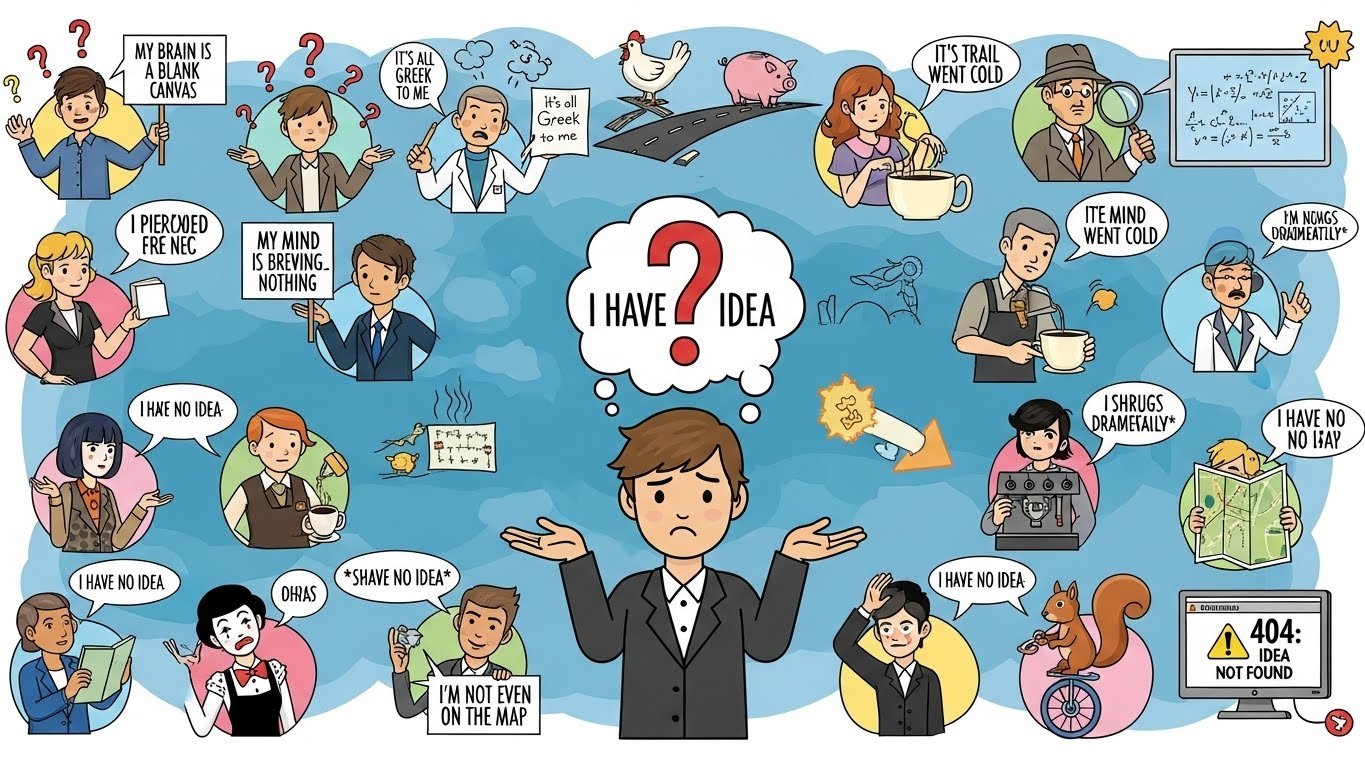
I have no idea We all encounter situations where someone asks a question, and we genuinely don’t know the answer. Instead of repeating “I have no idea” every time, using different expressions can make your communication more engaging, professional, or even humorous depending on the context. Whether it’s casual conversation, workplace emails, or presentations, knowing alternative ways to express uncertainty can help you sound confident and versatile.
- 25 Alternatives to ‘I Have No Idea’
- I Don’t Know
- I’m Not Sure
- Beats Me
- No Clue
- I Haven’t Got a Clue
- Not a Clue
- I Haven’t the Foggiest
- Who Knows?
- I’m Clueless
- Haven’t the Faintest Idea
- I’m Uncertain
- I’m Unsure
- I Cannot Say
- I’m Not Aware
- I Don’t Have the Details
- I’m Not in a Position to Answer
- That’s Beyond Me
- I’m Not Familiar with That
- I’m Lost on That
- Your Guess is as Good as Mine
- I Can’t Help You There
- I Haven’t Figured That Out
- I’m Not Confident on That
- That Escapes Me
- I Have No Information on That
- Frequrntly Asked Questions
25 Alternatives to ‘I Have No Idea’
👉 I don’t know
👉 I’m not sure
👉 Beats me
👉 No clue
👉 I haven’t got a clue
👉 Not a clue
👉 I haven’t the foggiest
👉 Who knows?
👉 I’m clueless
👉 Haven’t the faintest idea
👉 I’m uncertain
👉 I’m unsure
👉 I cannot say
👉 I’m not aware
👉 I don’t have the details
👉 I’m not in a position to answer
👉 That’s beyond me
👉 I’m not familiar with that
👉 I’m lost on that
👉 Your guess is as good as mine
👉 I can’t help you there
👉 I haven’t figured that out
👉 I’m not confident on that
👉 That escapes me
👉 I have no information on that
I Don’t Know
Definition: The simplest and most direct way to express that you lack knowledge on a topic.
Description: Suitable for casual and professional contexts.
Examples:
-
I don’t know the answer to that question.
-
Sorry, I don’t know the details about this project.
I’m Not Sure
Definition: Polite way to admit uncertainty.
Description: Slightly softer than “I don’t know,” often used in professional conversations.
Examples:
-
I’m not sure about the timeline for the report.
-
I’m not sure if she will attend the meeting.
Beats Me
Definition: Informal, humorous expression of complete ignorance.
Description: Usually used in casual conversation among friends or colleagues.
Examples:
-
Why did the system crash? Beats me!
-
How they solved the problem? Beats me.
No Clue
Definition: Casual way to indicate lack of knowledge.
Description: Suitable for informal spoken English.
Examples:
-
Do you know where he went? No clue.
-
I have no clue about the new software update.
I Haven’t Got a Clue
Definition: Slightly more emphatic than “no clue.”
Description: Informal, expressing total lack of information.
Examples:
-
I haven’t got a clue how to fix this.
-
I haven’t got a clue what she’s talking about.
Not a Clue
Definition: Very casual, often spoken.
Description: Used to emphasize complete ignorance.
Examples:
-
Where’s my notebook? Not a clue.
-
What’s happening in the meeting? Not a clue.
I Haven’t the Foggiest
Definition: Old-fashioned, humorous expression.
Description: Expresses that you truly have no idea, often used playfully.
Examples:
-
I haven’t the foggiest how this works.
-
I haven’t the foggiest why he left early.
Who Knows?
Definition: Rhetorical way to indicate uncertainty.
Description: Used when the answer is unknown to everyone or is unpredictable.
Examples:
-
Who knows what will happen next?
-
Who knows how they managed to finish on time?
I’m Clueless
Definition: Straightforward informal expression.
Description: Often used in casual or slightly frustrated contexts.
Examples:
-
I’m clueless about these new rules.
-
I’m clueless how to respond to that email.
Haven’t the Faintest Idea
Definition: Emphatic, polite way to express lack of knowledge.
Description: Slightly more formal or literary.
Examples:
-
I haven’t the faintest idea where he went.
-
I haven’t the faintest idea how this machine works.
I’m Uncertain
Definition: Polite and formal way to express doubt or lack of knowledge.
Description: Often used in professional emails or meetings.
Examples:
-
I’m uncertain about the delivery date.
-
I’m uncertain how this report was calculated.
I’m Unsure
Definition: Another polite way to admit uncertainty.
Description: Suitable for both formal and casual contexts.
Examples:
-
I’m unsure if the client approved the changes.
-
I’m unsure how to proceed with this task.
I Cannot Say
Definition: Formal way to politely indicate that you do not know.
Description: Often used when direct knowledge is unavailable or confidential.
Examples:
-
I cannot say how the decision was made.
-
I cannot say why the event was canceled.
I’m Not Aware
Definition: Formal way to indicate you lack awareness about something.
Description: Common in professional emails or meetings.
Examples:
-
I’m not aware of any changes to the schedule.
-
I’m not aware of the recent updates.
I Don’t Have the Details
Definition: Polite way to indicate partial knowledge but lack of specifics.
Description: Useful when you know something happened but not the full information.
Examples:
-
I don’t have the details of the meeting yet.
-
I don’t have the details about the project timeline.
I’m Not in a Position to Answer
Definition: Very formal and polite way to decline giving an answer.
Description: Often used in official or professional contexts.
Examples:
-
I’m not in a position to answer that question.
-
I’m not in a position to provide that information.
That’s Beyond Me
Definition: Expresses that the question is too difficult or complex for you.
Description: Slightly humorous or dramatic.
Examples:
-
How they solved the problem? That’s beyond me.
-
Why the system crashed? That’s beyond me.
I’m Not Familiar with That
Definition: Formal way to indicate lack of prior knowledge.
Description: Useful in professional or educational contexts.
Examples:
-
I’m not familiar with that software.
-
I’m not familiar with the details of the project.
I’m Lost on That
Definition: Informal, casual expression of being confused or unaware.
Description: Good for spoken English or casual emails.
Examples:
-
I’m lost on that part of the plan.
-
I’m lost on what he meant.
Your Guess is as Good as Mine
Definition: Casual way to indicate that even you have no idea.
Description: Often used humorously or in informal conversation.
Examples:
-
When will they arrive? Your guess is as good as mine.
-
How they fixed it? Your guess is as good as mine.
I Can’t Help You There
Definition: Polite way to admit you don’t know.
Description: Suitable for professional or casual contexts.
Examples:
-
I can’t help you there; you should ask John.
-
I can’t help you there, sorry.
I Haven’t Figured That Out
Definition: Indicates that you are still in the process of understanding.
Description: Casual or professional depending on tone.
Examples:
-
I haven’t figured that out yet.
-
I haven’t figured that out; maybe we can check together.
I’m Not Confident on That
Definition: Polite way to admit uncertainty.
Description: Useful in formal contexts where you may not want to give a wrong answer.
Examples:
-
I’m not confident on the results of this analysis.
-
I’m not confident on the timeline for completion.
That Escapes Me
Definition: Slightly humorous, formal way to indicate you do not know.
Description: Often used in conversation when an answer is forgotten or unknown.
Examples:
-
Why did this happen? That escapes me.
-
How they managed it? That escapes me.
I Have No Information on That
Definition: Very formal way to indicate complete lack of data.
Description: Suitable for professional, legal, or official contexts.
Examples:
-
I have no information on that request.
-
I have no information on the recent changes.
Frequrntly Asked Questions
Q: Can I use these alternatives in professional emails?
A: Yes, phrases like “I’m not sure,” “I’m not familiar with that,” or “I cannot say” are perfect for professional communication.
Q: Which alternatives are casual or humorous?
A: Phrases like “Beats me,” “Not a clue,” and “Your guess is as good as mine” are casual or humorous.
Q: Why should I avoid saying “I have no idea” repeatedly?
A: Using the same phrase can sound monotonous. Alternatives make your communication more engaging and versatile.
Q: Can these phrases be used in spoken English?
A: Absolutely! Many of them, like “Beats me,” “Who knows?,” or “I’m clueless,” are perfect for spoken conversation.