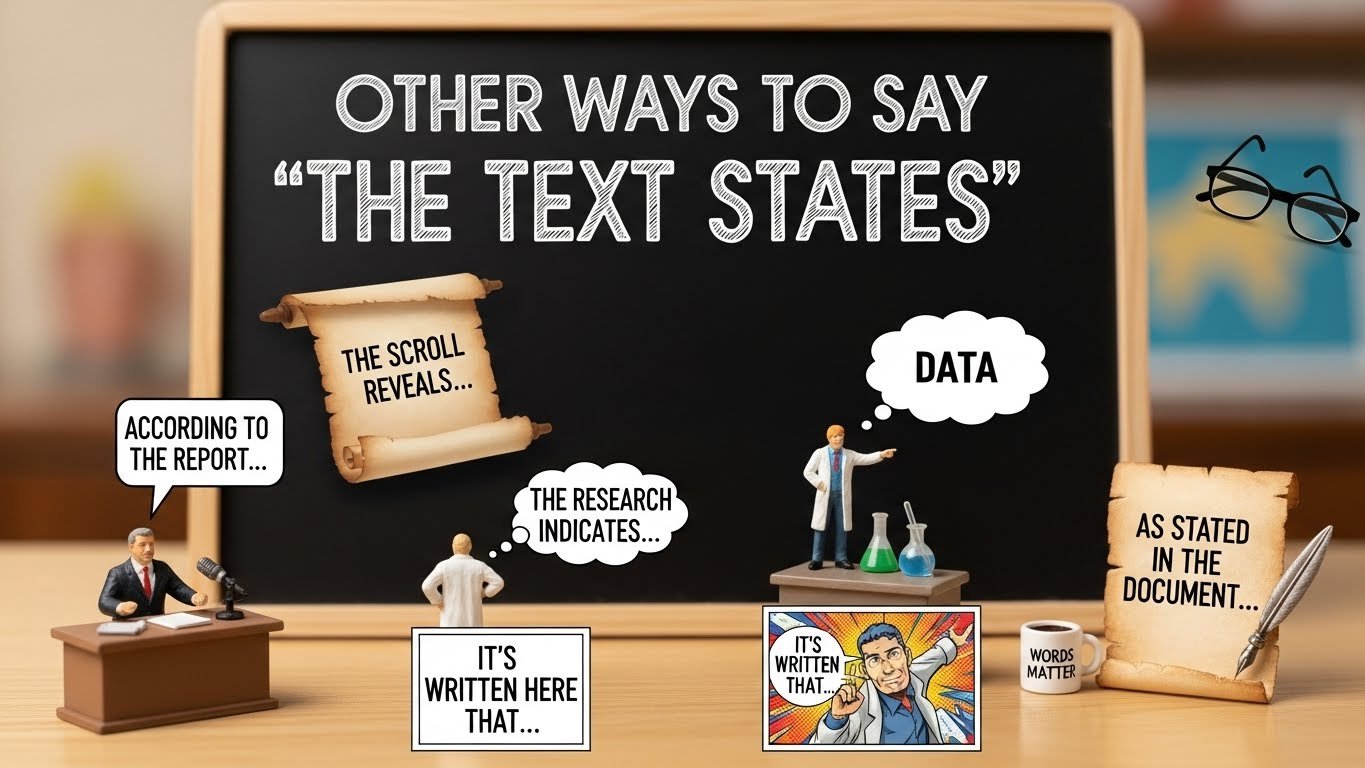
The phrase “the text states” is commonly used in academic writing, essays, research papers, and formal analysis to introduce information taken from a source. While it is clear and correct, using the same phrase repeatedly can make your writing sound repetitive and less engaging. Academic and professional writing benefits greatly from variety, clarity, and precision.That’s why learning other ways to say “the text states” is essential. Using alternative expressions helps improve readability, demonstrate strong vocabulary, and maintain a formal tone. Whether you’re writing an essay, literature review, report, or article, varying your phrasing can strengthen your argument and make your content sound more polished.
- 25 Other Ways To Say “The Text States”
- Detailed Alternatives
- The Text Explains
- The Text Suggests
- The Text Indicates
- The Text Describes
- The Passage States
- The Author States
- The Author Explains
- The Text Mentions
- The Text Highlights
- The Text Reveals
- The Text Emphasizes
- The Text Notes
- According to the Text
- The Text Asserts
- The Text Implies
- The Text Confirms
- The Text Points Out
- The Author Argues
- The Text Demonstrates
- Frequently Asked Questions
25 Other Ways To Say “The Text States”
👉 The text explains
👉 The text suggests
👉 The text indicates
👉 The text describes
👉 The passage states
👉 The author states
👉 The author explains
👉 The text mentions
👉 The text highlights
👉 The text reveals
👉 The text emphasizes
👉 The text clarifies
👉 The text notes
👉 The passage explains
👉 According to the text
👉 The article states
👉 The text asserts
👉 The text implies
👉 The text confirms
👉 The text points out
👉 The author argues
👉 The author notes
👉 The text demonstrates
👉 The passage suggests
👉 The text conveys
Detailed Alternatives
The Text Explains
Definition: Introduces information that clarifies an idea.
Description: Useful when the source provides detailed explanation.
Examples:
• The text explains the main cause of the problem.
• The text explains how the process works.
The Text Suggests
Definition: Indicates an idea or possibility rather than a fact.
Description: Common in analytical and interpretive writing.
Examples:
• The text suggests a link between the two events.
• The text suggests that change is necessary.
The Text Indicates
Definition: Shows or points to information indirectly.
Description: Formal and widely used in academic contexts.
Examples:
• The text indicates a shift in tone.
• The text indicates that progress was slow.
The Text Describes
Definition: Provides details about something.
Description: Best for descriptive or narrative content.
Examples:
• The text describes the setting vividly.
• The text describes the character’s emotions.
The Passage States
Definition: Refers to a specific part of a text.
Description: Helpful when analyzing sections or excerpts.
Examples:
• The passage states the author’s main argument.
• The passage states the historical background.
The Author States
Definition: Attributes information directly to the writer.
Description: Formal and commonly used in essays.
Examples:
• The author states that education is essential.
• The author states his position clearly.
The Author Explains
Definition: Introduces clarification provided by the writer.
Description: Suitable for explanatory analysis.
Examples:
• The author explains the concept in detail.
• The author explains why the event occurred.
The Text Mentions
Definition: Refers briefly to information.
Description: Used when something is noted but not discussed deeply.
Examples:
• The text mentions earlier research.
• The text mentions several key examples.
The Text Highlights
Definition: Draws attention to important information.
Description: Emphasizes significance.
Examples:
• The text highlights the importance of teamwork.
• The text highlights major challenges.
The Text Reveals
Definition: Shows information that becomes clear through analysis.
Description: Strong word for interpretation.
Examples:
• The text reveals hidden themes.
• The text reveals the character’s true motives.
The Text Emphasizes
Definition: Stresses a key point.
Description: Useful for identifying main ideas.
Examples:
• The text emphasizes honesty.
• The text emphasizes the need for reform.
The Text Notes
Definition: Briefly records or observes information.
Description: Neutral and academic.
Examples:
• The text notes a change in policy.
• The text notes several concerns.
According to the Text
Definition: Introduces information sourced directly from a text.
Description: Very common in academic writing.
Examples:
• According to the text, the law was revised.
• According to the text, progress was limited.
The Text Asserts
Definition: States something confidently or forcefully.
Description: Often used in argumentative writing.
Examples:
• The text asserts that freedom is essential.
• The text asserts a strong opinion.
The Text Implies
Definition: Suggests something without stating it directly.
Description: Ideal for analytical interpretation.
Examples:
• The text implies a deeper meaning.
• The text implies that change is inevitable.
The Text Confirms
Definition: Verifies or supports a claim.
Description: Strong and authoritative tone.
Examples:
• The text confirms earlier findings.
• The text confirms the hypothesis.
The Text Points Out
Definition: Directs attention to specific information.
Description: Semi-formal and explanatory.
Examples:
• The text points out key differences.
• The text points out the main issue.
The Author Argues
Definition: Introduces the writer’s main claim or viewpoint.
Description: Common in persuasive and critical writing.
Examples:
• The author argues for policy reform.
• The author argues that change is necessary.
The Text Demonstrates
Definition: Shows evidence through examples or explanation.
Description: Formal and academic.
Examples:
• The text demonstrates the effects of stress.
• The text demonstrates a clear pattern.
Frequently Asked Questions
Q1: Is “the text states” acceptable in academic writing?
Yes, but using alternatives improves clarity and avoids repetition.
Q2: Which alternatives are best for formal essays?
Phrases like “the text indicates,” “according to the text,” and “the author argues” work well.
Q3: Can I use these alternatives in research papers?
Absolutely. Many of these expressions are commonly used in scholarly writing.
Q4: Should I vary phrases when referencing sources?
Yes, variation improves readability and shows strong writing skills.
Q5: Are these alternatives suitable for literature analysis?
Yes, especially phrases like “the text reveals,” “the passage suggests,” and “the author explains.”